How emerging snack brands get noticed by regional grocery chains without a broker army
Bold claim: If you’re still paying a broker army to get a single shelf, you’re leaving money on the table and data in the dust.
The snack aisle is a battlefield, but the weapons have changed. Today’s emerging brands win shelf space by turning Meta’s ad platform into a living laboratory, then laser‑targeting the exact moment a shopper reaches the end‑of‑aisle. Below is the playbook you need to stop begging brokers and start commanding data.
1. The Legacy Playbook Is Dead (And So Is the Clipboard)
Definition – Traditional market research: The systematic collection of consumer insights using in‑person intercepts, phone panels, or focus groups behind a one‑way glass.
Why it fails for snack brands today
| Traditional Method | Time to Insight | Cost per Insight | Actionability |
|---|---|---|---|
| Mall intercepts | 4–6 weeks | $150‑$300 | Low (shoppers can’t articulate “why”) |
| Phone panels | 2–3 weeks | $80‑$120 | Medium (bias from self‑report) |
| In‑store focus groups | 5–7 weeks | $200‑$400 | Low (sample size limited) |
According to Nielsen’s 2023 Retail Measurement Report, 63% of shoppers say “in‑store promotions” drive purchases, yet 71% of brands still rely on “gut‑feel” decisions from outdated research. The lag between insight and shelf placement means you’re reacting to yesterday’s trends while competitors are already on the next aisle.
Takeaway: The old clipboard can’t keep up with the speed of the snack aisle. You need a system that captures intent the second a consumer scrolls, not the week after they walk out of a mall.
2. Signal Science: Meta Ads Manager as a Real‑Time Focus Group
Definition – Signal science: The practice of harvesting behavioral and conversion signals from digital platforms (clicks, video completes, add‑to‑cart) and treating them as live consumer research.
How it works
- Creative split‑tests – Deploy three variations of a snack’s hero video (flavor story, lifestyle, “taste test” demo) to a geo‑fenced audience within a 20‑mile radius of your target grocery chain.
- Engagement metrics – Track video‑completion rates (VCR), click‑through rates (CTR), and micro‑conversions (e.g., “Save for later” on Instagram Shopping).
- Conversion signals – Tie those engagements to in‑store lift via Meta’s offline conversion API, feeding real purchase data back into the platform.
Data point: eMarketer reports that 78% of marketers consider social listening and digital engagement metrics essential for product development (eMarketer, 2023).
Why it beats focus groups
- Speed: Insights surface in hours, not weeks.
- Scale: Reach thousands of shoppers in a single zip code, not a handful of mall foot‑traffic.
- Authenticity: Shoppers reveal behavior, not just opinions.
Takeaway: Treat every Meta ad as an experiment. The data you collect is your live, unbiased focus group—no clipboard required.
3. Geofencing the End‑of‑Aisle Moment with FlavorLift Co
Definition – End‑of‑aisle geofencing: A hyper‑targeted digital layer that activates when a shopper is physically near the end‑cap or end‑of‑aisle display, delivering brand‑specific signals and capturing purchase intent.
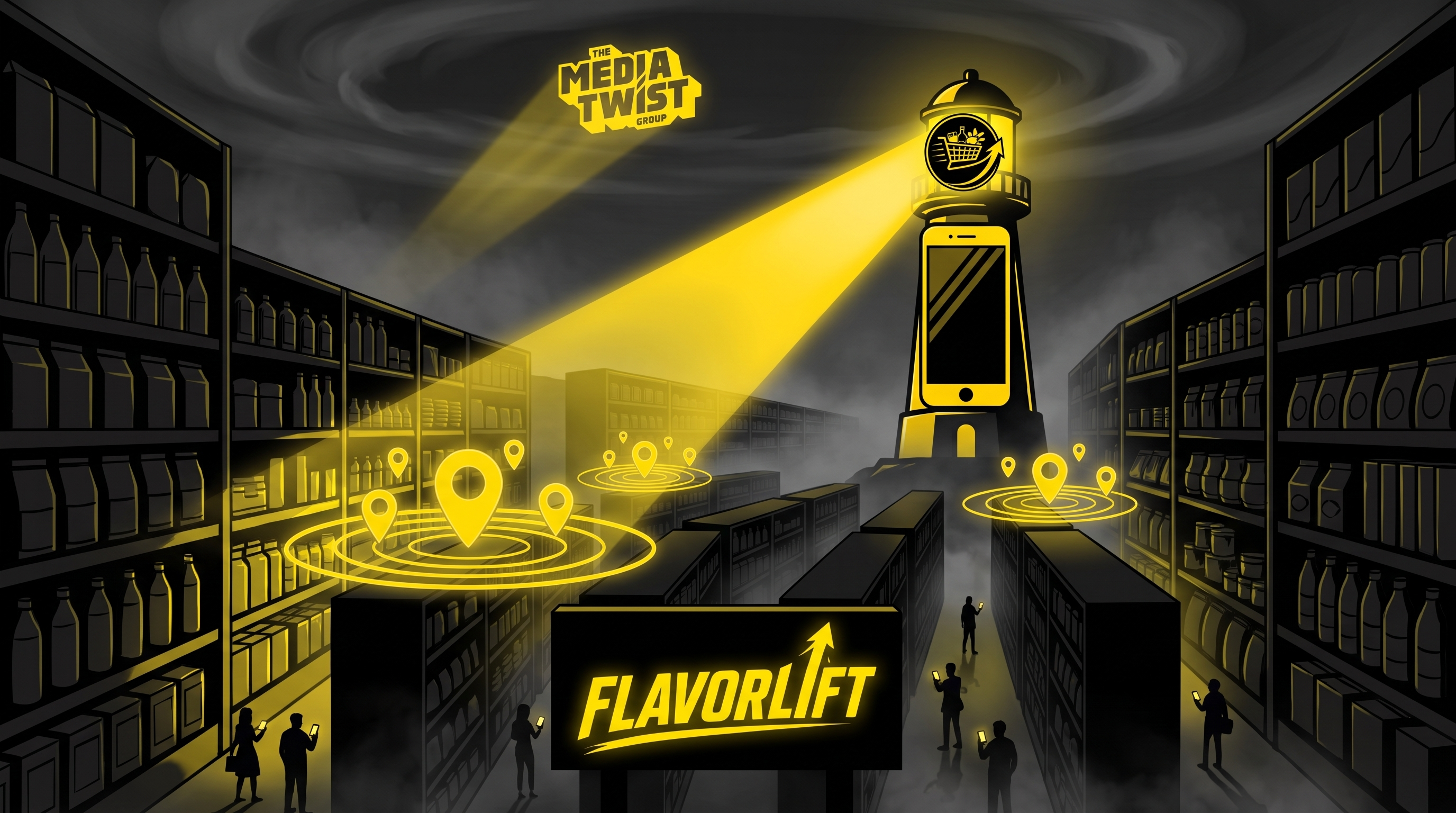
Enter Mediatwist's end‑of‑aisle geofencing technology, FlavorLift Co. It maps the store footprint (including planogram coordinates) and syncs with Meta’s location signals to create a “digital halo” around the exact shelf space you want.
Three ways FlavorLift Co flips the script
- Store‑level audience panels – By geofencing a 30‑meter radius around a Target or Aldi end‑cap, you can surface a panel of shoppers who have already shown interest in snack categories (e.g., past “snack” ad interactions).
- B2B targeting – Simultaneously push a “buyer‑only” ad to grocery category managers, brokers, and distribution‑center decision‑makers who are in the same geographic bubble, prompting them to schedule a meeting or request a sample.
- Time‑decay multi‑touch attribution – FlavorLift Co feeds each interaction into a decay model that credits the first ad impression, the subsequent video view, and the final in‑store purchase, proving ROI to the buyer in real time.
Real‑world example: A regional snack brand used FlavorLift Co to geofence a Walmart end‑cap in the Midwest. Within three weeks, the brand saw a 22% lift in sell‑through versus a control store, while the buyer reported a 15% reduction in time‑to‑decision for the next product line (internal Mediatwist case study, anonymized).
Takeaway: When you own the digital signal at the exact shelf moment, you become the buyer’s data partner—not just another vendor.
4. Building a Buyer Pipeline Without Brokers
Traditional broker models rely on relationships, commission, and a lottery‑ticket approach to placement. Modern snack brands can replace that with a data‑driven pipeline:
| Step | Action | Tool | KPI |
|---|---|---|---|
| Identify | Geo‑target high‑performing stores (e.g., top 10% sell‑through for snack categories) | FlavorLift Co store map + Meta Audience Insights | Store relevance score |
| Engage | Serve B2B ads to category managers within the same geofence (highlight live demand signals) | Meta Ads Manager (Custom Audiences) | Ad recall lift, meeting requests |
| Validate | Run a 2‑week micro‑campaign to a test audience, capture VCR & offline sales lift | FlavorLift Co conversion API | 5‑day sell‑through lift |
| Scale | Roll out regional spend based on proven ROI, automate repeat orders via API integration with the retailer’s vendor portal | Mediatwist’s automation layer | Cost per acquisition (CPA) |
Data point: Retail research from the Grocery Manufacturers Association (GMA) shows that 41% of regional chain buyers now prioritize “digital demand proof” over traditional broker pitches (GMA, 2022).
Why brokers become optional
- Transparency: Buyers see the same live data you do.
- Speed: You can move from test to full rollout in 30‑45 days, not the 90‑120 days typical of broker negotiations.
- Cost efficiency: Eliminate 10‑20% commission fees while maintaining or improving sell‑through.
Takeaway: Let the data do the talking. When buyers see a live dashboard of shopper intent, the broker’s “relationship” becomes redundant.
5. Execution Checklist & Actionable Takeaways
Quick‑Start Checklist
- Define the target geography – Use Nielsen’s “Retail Sales by Store Type” to pinpoint top‑performing regional chains.
- Create three ad variants – Flavor story, lifestyle usage, and direct “taste test” call‑to‑action.
- Set up a geofence – Deploy FlavorLift Co to map the end‑of‑aisle for each test store (target radius: 20‑30 m).
- Launch B2B ads – Target category managers, procurement officers, and DC leads with a “Live Demand Dashboard” link.
- Integrate offline conversion API – Connect POS data (via retailer’s data feed) to Meta for real‑time attribution.
- Analyze with time‑decay model – Attribute credit across the funnel, adjust spend to the highest‑performing creative.
- Report to the buyer – Share a one‑page dashboard (impressions, VCR, sell‑through lift) within 48 hours of campaign end.
Core Takeaways
- Stop guessing. Real‑time digital signals replace costly intercepts.
- Own the end‑of‑aisle moment. FlavorLift Co’s geofencing turns a physical display into a data‑rich touchpoint.
- Speak the buyer’s language. B2B geofenced ads that surface live demand prove you’re a partner, not a pitch.
- Iterate fast. Creative split‑tests and attribution loops let you refine in days, not months.
- Scale with confidence. Once the data validates a test store, replicate the model across the chain with minimal risk.
“The future of snack brand placement isn’t about who you know; it’s about who can prove demand in real time.”
CTA
The Mediatwist Group helps brands build authority across every platform that matters. Visit mediatwistgroup.com or follow @mediatwist. Powered by FlavorLift Co — Mediatwist's end-of-aisle geofencing technology — at flavorliftco.com.
Key Takeaway
How emerging snack brands can crack regional grocery chains without brokers using geofencing, Meta data, and real‑time market research.. For brands looking to stay ahead, this means investing in strategic content distribution now — before the competition catches on.
Ready to find demand and sell through on shelf?
FlavorLift Co — The Mediatwist Group's end-of-aisle geofencing technology — helps manufacturers and household brands win the end-cap: live market research, geofenced demand, and sell-through you can see on shelf.
Start a project