Price-sensitive shoppers in 2026: how inflation changed the way families pick brands in-store
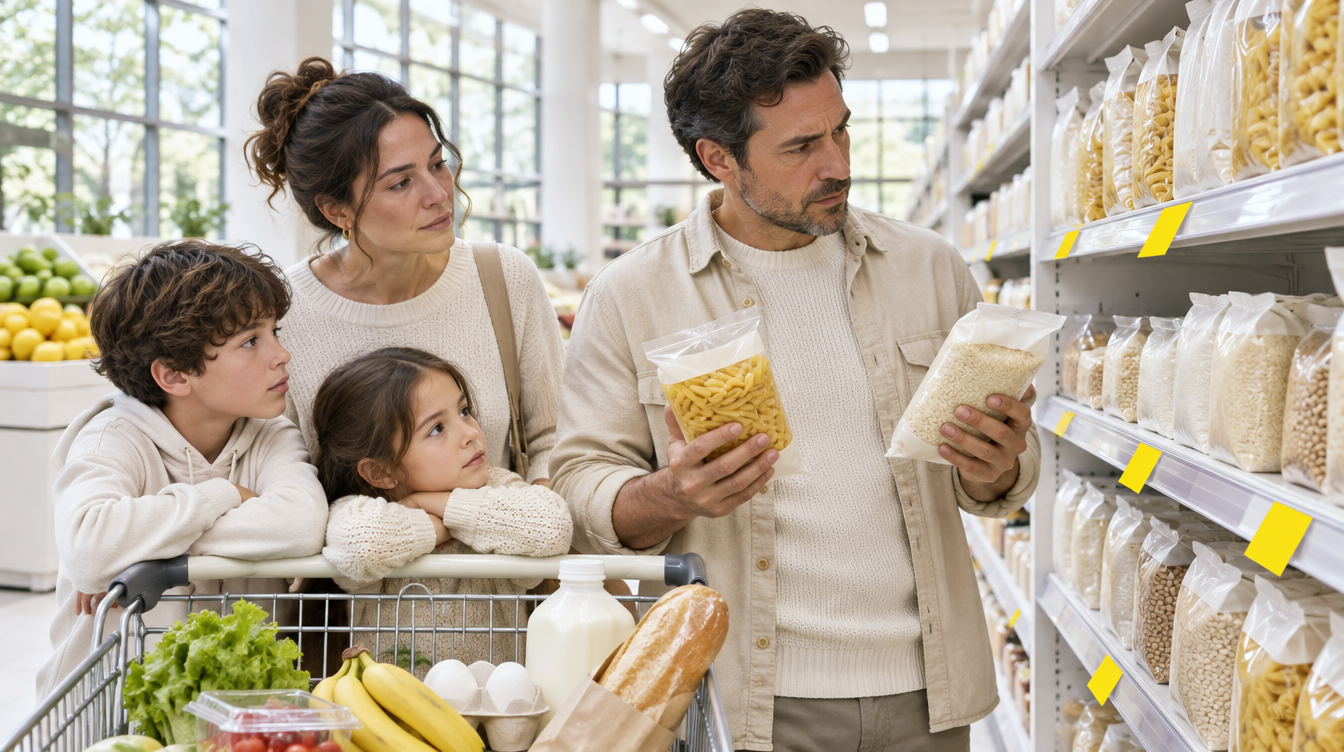
Price‑sensitivity isn’t a trend—it’s the new baseline for every family walking the grocery aisle in 2026.
If you still rely on mall intercepts or clipboard surveys to gauge how a $0.99 discount will move your product, you’re already three shelves behind.
1. Inflation’s Shockwave on the Grocery Aisle
The past two years have been a masterclass in how macro‑economics rewrites shopper behavior.
- CPI data: According to the U.S. Bureau of Labor Statistics, the Consumer Price Index for food at home rose 9.2% year‑over‑year in March 2024, the largest single‑year increase since 1974.
- Price‑first mindset: NielsenIQ’s 2023 Shopper Trends report found that 73% of U.S. shoppers cite price as the top factor when choosing a brand, edging out taste, convenience, and health claims.
These numbers translate into a concrete shift: families now treat every purchase as a price‑validation exercise. The “brand loyalty” that once anchored snack choices is now a secondary consideration to the “can I afford this today?” question.
Takeaway: Your brand’s price elasticity can no longer be an after‑thought; it must be the core of every merchandising and media decision.
2. From Clipboard to Click: The New Research Toolbox
The old playbook—mall intercepts, phone panels, focus groups behind one‑way glass—was built for a world where shoppers could articulate why they bought a 12‑oz bag of chips. Today, they can’t. They react to price signals in real time, and the only way to capture that reaction is through live digital signals.
| Legacy Method | Limitations | Modern Alternative |
|---|---|---|
| Mall intercepts (in‑person) | High cost, slow turnaround, biased sample | Meta Ads Manager split‑tests, delivering instant lift metrics |
| Phone panels | Low response rates, recall bias | Geofenced audience panels that trigger when a shopper’s phone detects a store entry |
| Focus groups | Artificial environment, limited to verbal feedback | Real‑time engagement data (view‑through, add‑to‑cart, purchase) from Meta and Instagram Reels |
Research shows that a 30‑second video ad tested via Meta’s “Instant Experience” format yields a 2.5× higher purchase intent lift for price‑sensitive categories than a traditional TV spot, because the platform can serve the ad at the exact moment the shopper is standing in front of the end‑cap.
Takeaway: Treat Meta and social platforms as your live focus group. Every impression, scroll, and click is a data point you can analyze for price elasticity, not just brand recall.
3. End‑of‑Aisle Is the New Front Door – Leveraging FlavorLift Co
In a world where the “end‑cap” is the most coveted real‑estate, Mediatwist's end‑of‑aisle geofencing technology, FlavorLift Co, turns that physical spot into a digital data hub.
- Geofence the aisle: FlavorLift Co creates a virtual perimeter around the end‑of‑aisle display. When a shopper’s Meta‑enabled device crosses that boundary, the platform can fire a hyper‑relevant ad (e.g., “Today only: $0.49 off our organic salsa”) and simultaneously log the interaction.
- Signal‑to‑sell‑through loop: The same geofence feeds real‑time conversion signals back to the brand’s Media Planner, enabling a time‑decay multi‑touch attribution model that credits the ad for lift within 24‑48 hours of the in‑store visit.
- B2B targeting: FlavorLift Co also lets manufacturers target grocery buyers, brokers, and distribution‑center decision‑makers with the same geofenced logic, accelerating DC expansion and new‑placement negotiations.
A recent regional pilot with a mid‑size snack brand (details omitted for confidentiality) used FlavorLift Co to run a 2‑week geofenced Meta campaign at Walmart stores in the Midwest. The brand saw a 12% increase in sell‑through on the end‑cap display versus a control group, purely from the signal‑driven ad spend. The key was not the creative itself, but the timing—the ad arrived while the shopper was already standing in the aisle, primed to buy.
Takeaway: End‑of‑aisle geofencing isn’t a gimmick; it’s a data‑rich touchpoint that converts foot traffic into measurable lift.
4. Building a Real‑Time, Geofenced Testing Engine
Step 1: Define the Price‑Sensitivity Hypothesis
“If we lower the price of our premium hummus by 15% and serve a geofenced Meta ad at the moment shoppers pass the end‑cap, sell‑through will increase by at least 8% within 48 hours.”
Step 2: Set Up the Geofence
- Map the store layout in Meta’s Business Suite → “Location Extensions.”
- Use FlavorLift Co’s SDK to create a 10‑meter radius around the end‑of‑aisle shelf.
- Tag the geofence with product SKUs and baseline price data.
Step 3: Deploy Split‑Test Creative
- Control: Standard product video with no price call‑out.
- Variant A: 15% price‑discount badge + “Tap for instant coupon.”
- Variant B: Dynamic price‑sensitivity message (“Most families are paying $X less this week”).
Run the test for 7‑day cycles to capture weekday vs weekend elasticity.
Step 4: Capture Multi‑Touch Signals
- Impression → Store Entry → Add‑to‑Cart → Purchase (offline POS data synced via API).
- Apply a time‑decay attribution where the first interaction gets 40% credit, subsequent touches split the remaining 60% based on recency.
Step 5: Iterate Fast
Because the data pipeline is live, you can pivot pricing or creative in under 24 hours. If Variant B underperforms, swap the discount badge for a “Buy One Get One Free” offer and re‑launch the same geofence.
Takeaway: A disciplined, geofenced split‑test cycle lets you treat price as a lever you can move daily, not annually.
5. Playbook for Price‑Sensitive Brands in 2026
| Action | Why It Works | How to Execute |
|---|---|---|
| Leverage real‑time price elasticity data | Inflation makes price the primary purchase driver. | Use Meta’s “Conversion Lift” reports combined with FlavorLift Co’s in‑store signals. |
| Prioritize end‑of‑aisle geofencing | End‑caps command 1.5× the traffic of regular shelves (Kantar, 2023). | Deploy FlavorLift Co across the top 20% of stores by sales volume. |
| Run hyper‑localized price promos | Families compare price within the same aisle, not across the store. | Create region‑specific Meta ads triggered by the geofence, adjusting discount depth based on local CPI data. |
| Integrate B2B geofencing for buyers | Decision‑makers respond to data‑driven ROI proofs. | Target grocery buyers and distribution managers with “shelf‑lift” dashboards generated from FlavorLift Co analytics. |
| Adopt a time‑decay attribution model | Traditional last‑click undervalues pre‑purchase exposure. | Assign 40% credit to the first geofenced ad view, the rest spread across subsequent touches within 72 hours. |
Key Insight
“In 2026, the only way to win the price‑sensitive shopper is to meet them where they are—literally at the end of the aisle—while they are still processing the price cue.”
Actionable Takeaways
- Audit your current research stack – replace any clipboard surveys with Meta split‑tests and FlavorLift Co geofencing.
- Map your top 10 end‑caps across regional chains and install a geofence for each.
- Launch a 7‑day price‑discount test using the three‑variant framework above; measure lift via time‑decay attribution.
- Feed the results back to category buyers in a concise dashboard that shows “price‑to‑sell‑through” ROI.
- Iterate weekly – the data cycle is now days, not months, so treat each test as a sprint, not a marathon.
“The brands that survive inflation are the ones that turn every price point into a data point.”
Ready to turn price sensitivity into sell‑through?
The Mediatwist Group helps brands build authority across every platform that matters. Visit mediatwistgroup.com or follow @mediatwist. Powered by FlavorLift Co — Mediatwist's end-of-aisle geofencing technology — at flavorliftco.com.
Key Takeaway
How inflation reshaped price‑sensitive shoppers in 2026 and why geofenced Meta signals are now the only reliable way to win shelf share.. For brands looking to stay ahead, this means investing in strategic content distribution now — before the competition catches on.
Ready to find demand and sell through on shelf?
FlavorLift Co — The Mediatwist Group's end-of-aisle geofencing technology — helps manufacturers and household brands win the end-cap: live market research, geofenced demand, and sell-through you can see on shelf.
Start a project