The Air Fryer Aisle: How Bold Retailers Turn a Kitchen Trend Into Category Growth
There's a kitchen appliance sitting on roughly two of every three American countertops, and it is quietly rewriting the fresh-food playbook. The air fryer stopped being a fad somewhere around its third holiday season. It's now a default cooking method — the thing shoppers reach for on a Tuesday night when they want crispy, fast, and forgiving. For store managers and category buyers, that shift is not a novelty. It's a standing invitation to grow baskets in a category most teams had written off as flat: fresh potatoes.
This is the part most merchandising plans miss. The air fryer didn't just sell appliances. It changed what shoppers cook — and that change lands squarely in your perimeter and your center store. The question on the table for every buyer this year is simple: are you going to let that demand wander the aisle unguided, or are you going to build a set that captures it?
Why the air fryer is a category event, not a gadget
Trends that move retail aren't about the device. They're about the new habits the device creates. The microwave created an entire frozen-meal economy. The Instant Pot moved dried beans and bone broth. The air fryer is doing the same thing for fresh, crispable produce — and potatoes are the breakout star, because they deliver exactly what the appliance promises: speed, crunch, and restaurant-quality results without the oil.
What makes this a category event rather than a single-SKU bump:
- Frequency. Air fryer households cook more often, in smaller batches, more nights per week. More cooking occasions means more trips and more repeat purchases — the holy grail of velocity.
- Trade-up. A shopper crisping potatoes is a shopper open to a seasoning blend, a premium petite varietal, or a ready-to-cook steamable. The appliance creates permission to spend more per trip.
- Cross-category pull. The air fryer basket rarely contains one item. It pulls seasonings, oils, dips, proteins, and vegetables into the same trip. Merchandised together, that's incremental basket value you don't have to discount your way into.
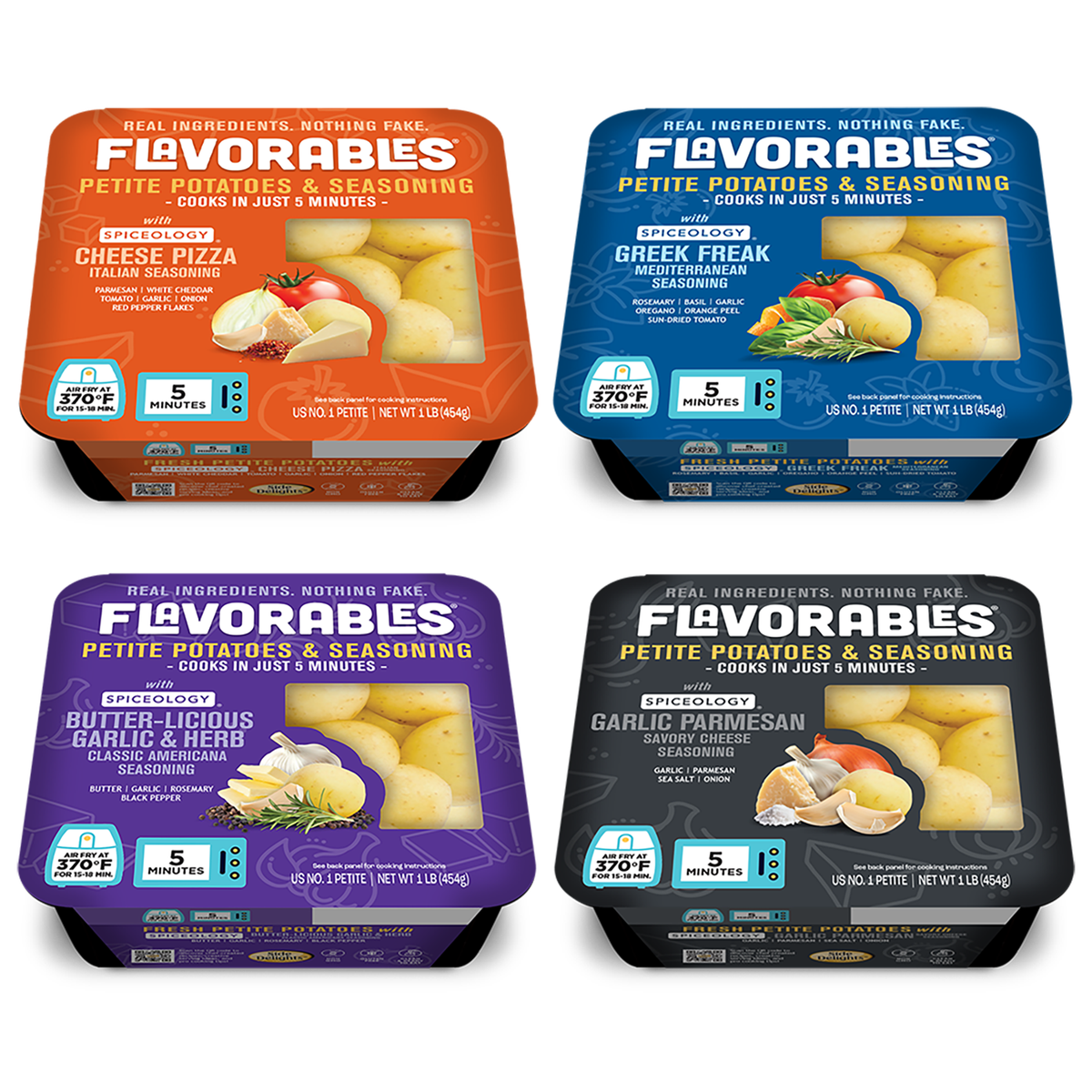
The brands featured across the fresh category — Side Delights® Flavorables® with Spiceology® seasonings, petite varietals built for even crisping, triple-washed steamables ready to go straight in the basket — exist precisely because the cooking occasion changed. The product is ready. The shopper is ready. The only variable left is the set.
The math buyers actually care about
Let's talk like category managers for a minute, because "the air fryer is trending" doesn't move a planogram. Incremental basket value does.
Picture a mid-size banner running 140 stores. A shopper who buys a 3 lb bag of conventional russets spends a few dollars and leaves. Now build that same trip as an air fryer occasion: a petite varietal bag, a seasoning blend, and a steamable convenience pack merchandised as a set. You haven't changed the shopper. You've changed the structure of the trip — and you've roughly doubled the ring without a single price cut.
Multiply a modest per-trip lift across thousands of weekly potato occasions per store, across 140 stores, across a year. The flat category you were defending becomes a growth line you can take to your VP. That is the entire argument, and it's why the retailers moving first are the ones who will own the shelf when the rest of the market catches up.
The buyer's air-fryer set: a merchandising blueprint
Here's the part you can action this quarter. A high-velocity air fryer set is built on three roles, not three SKUs:
- The crisp hero. A petite or fingerling varietal positioned as the air fryer potato — even-sized for consistent crisping, premium enough to justify the trade-up, photographed crispy on the bag.
- The flavor multiplier. A seasoning line co-merchandised inches away. This is where margin lives and where the trip expands. Bold, on-trend flavors turn a commodity into a destination.
- The convenience pack. Triple-washed, ready-to-cook steamables for the shopper who wants zero prep. This captures the time-starved weeknight buyer the appliance was made for.
Wrap those three in the right merchandising mechanics:
- Secondary displays near the appliance-adjacent traffic and at the produce entrance, not buried in the potato bin.
- Cross-merchandising with oils, dips, and proteins — build the occasion, not the item.
- Bundled "air fryer set" signage that does the recipe thinking for the shopper. A set that tells the shopper exactly what to make outsells three loose SKUs every time.
The retailers who treat this as a curated occasion — not a stack of bags — are the ones turning a kitchen trend into trips, trade-up, and repeat purchases.
Demand doesn't end at the shelf
Here's where most merchandising plans stop and where the next level begins. A perfect set still depends on the shopper remembering it at the moment of decision — and the average in-aisle decision happens in about two and a half seconds. Placement gets you on the field. It doesn't guarantee the pickup.
The retailers and brands pulling ahead are surrounding the buying moment with a deliberate signal layer: trip-planting creative before the store run, store-proximity reinforcement as the shopper enters the trade area, and household-level recipe and reorder cues in the days after. The air fryer set on the shelf and the air fryer idea in the shopper's head have to arrive at the same time. When they do, the set doesn't just sit there looking good — it moves.
This is the discipline behind every durable retail win: local, behavioral, repetitive. One exposure decorates an aisle. A sequenced set of exposures, timed to the trip, engineers a habit. The trend gave you the tailwind. The signal layer is how you actually catch it.
What to do before your next category review
If you take one thing into your next planogram meeting, make it this: the air fryer is not a seasonal callout, it's a structural change in how your shoppers cook — and fresh potatoes are the SKU it rewards most.
The retailers who win the next two years will be the ones who built the set early, merchandised the occasion instead of the item, and surrounded the buying moment with a signal that shows up right when the shopper does. The product is on the truck. The habit is in the home. The only question left is whether your shelf is built to capture it before the banner across town does.
The trend put the air fryer on the counter. Smart merchandising puts the basket in the cart.
Ready to engineer demand around the trends already moving your shoppers? The Mediatwist Group builds the signal layer that turns shelf presence into shelf velocity.
Turn shelf presence into shelf velocity
The Mediatwist Group engineers demand around the trends already moving your shoppers.
Start a project